
Food Security
What does “food security” mean to you? Ensuring people can feed themselves and their families? Having enough food in the larder to last three days in case of shortages? Or something else?
At the National Emergency Briefing, held at Westminster Hall last November, experts from different disciplines set out the case for taking immediate action, at scale, to address the biodiversity and climate emergencies. And, as the following extracts from the briefings suggest, food security is interconnected with other issues.
“The increasing pressure on global food supplies in the face of accelerating climate change and nature loss affects every family and every constituent in this country. When food systems fail and we see empty supermarket shelves with people queuing for hours for food, protests and civil unrest start to occur”. Professor Paul Behrens University of Oxford
“When we destroy nature, we expose ourselves to escalating risks: floods, fires, heat waves, food insecurity and economic instability. When we protect and restore nature, we can build resilience, create jobs, and strengthen the foundations of a safe, happy and prosperous community and country”. Professor Nathalie Seddon University of Oxford
“Our skyrocketing energy bills have been a major factor driving inflation and the cost of living pressure felt by so many people and businesses. This is a significant political risk for that energy transition. Thankfully, the evidence is clear that an energy system powered by renewables will indeed be more affordable and more economically secure”. Tessa Khan: Executive Director at Uplift
“In every transition, every industrial and agricultural revolution, new technologies replace the old, societies change, and innovation and productivity leaps. There are two big issues which are slowing us down towards a green transition – market rules are not driving the right outcomes, and the old world is not making way for the new”. Angela Francis Director of Policy Solutions at WWF-UK
Food facts!
Looking specifically at food the briefing provides some fascinating facts:
“Our food system drives the UK’s emissions, habitat loss, pollutes our water and air, depletes our freshwater, drives antimicrobial resistance and creates the conditions for the emergence of new pandemics”.
“Britain imports 40-50% of its food”.
“Animal agriculture takes up around 85% of total agricultural land in the UK”.
“Britain has seen three of the five worst cereal harvest on record this decade”.
“We need a great food transformation built on four main pillars: (1) shifting to plant-rich diets, (2) reducing food waste, (3) improving production and (4) increasing climate resilience”.
“We need to move to plant based diets, reducing cancers, diabetes, cardiovascular disease, stroke and more – if we make these moves to the recommended diet, we get longer lives, lower emissions, and enormous cash savings. These changes also reduce obesity – if we fix that, it would save this country £126 billion a year”.
“One third of the food price inflation seen in 2023 was driven by extreme weather events. Civil unrest driven by food supply crises is 40% possible within a decade”.
“Inflation would have been 7% lower if we had decarbonised the power sector ahead of Russia invading Ukraine. It would have been a further 9% lower if our food system wasn’t linked to fossil fuels through fertiliser prices, which went up 400% at that same time, and it would have been 11% lower if we had switched to heat pumps earlier”.
Taking Action
As well as providing the evidence for why we need to act now, the experts also set out the benefits of doing so, including reducing the cost of living; creating new jobs; improving food security, energy security, national security, public health, and the quality of our air, soil and water, and propose solutions that make economic sense.
As with many emergencies it is vital to act immediately as delay will not just cost more money but increase risks to, and impacts on, our lives.
Achieving the system wide change needed requires national, local and individual action. And to get support for change we need to have honest evidence based conversations that touch hearts and minds of decision makers and the general population.
As Professor Mike Berners-Lee of Lancaster University said in his closing remarks:
“Firstly, we want a reset of the national conversation, to establish the evidence and the stakes. We are asking for a World War Two level of leadership because our society depends on it. We need emergency legislation, investment and job creation. And none of that is possible without a campaign of public information and engagement”.
People’s Emergency Briefing
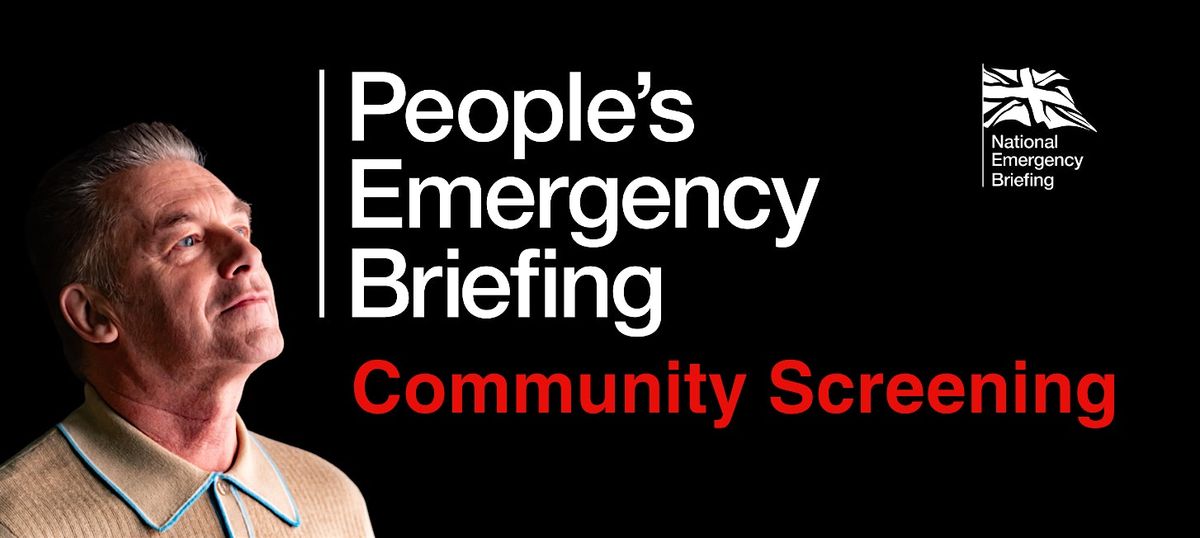
To help inform and engage the general public a People’s Emergency Briefing film has been produced that mixes footage from the National Emergency Briefing with reactions from a variety of people who watched the film in the company of Chris Packham.
The film is available for free to community groups and organisations so that they can bring people together to watch the film and discuss actions they can take.
Since its launch in April 2026, over 3,000 screenings have happened in community spaces, school halls, cinemas, and workplaces.
At a recent screening organised by Our Yard Clitterhouse, held at Claremont Primary School NW2, there was general agreement that “everyone should see this movie”.
So, if you haven’t seen the film yet, a (free) public screening of the film will be held at the Phoenix Cinema East Finchley on Wednesday 14th October starting at 6pm – tickets can be booked on the cinema website.
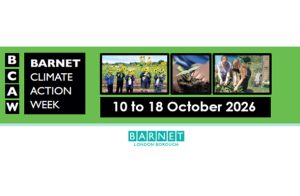
The screening is being arranged by the Phoenix in partnership with Barnet Climate Action Group, Barnet Friends if the Earth, Chipping Barnet Foodbank, East Finchley Town Team, Finchley Campaign for Nuclear Disarmament, Goodgym and Incredible Edible Barnet.
It would be great if members of Barnet Food Partnership could be there but if you can’t make it check out the list of screenings on the National Emergency Briefing website (https://www.nebriefing.org/screening-map) and find one you can go to.
And why not help organise community screenings for Barnet Food Partnership organisations, volunteers and people we help so that more people can see the movie and get inspired to act.